Academics

Affiliation
Board affiliation
Describe how subjects are categorized and taught. (e.g., “The DP requires students to choose subjects from six groups: Studies in Language and Literature, Language Acquisition, Individuals and Societies, Sciences, Mathematics, and the Arts.”)
State the board name clearly (e.g., “Our School is proudly affiliated with the Council for the Indian School Certificate Examinations (CISCE) – ICSE“).
Pre-Primary (Nursery, LKG & UKG)
Our Pre-Primary program lays a strong foundation through joyful learning. Children learn through play-based activities, hands-on exploration, songs, storytelling and creativity.
Teacher Features: Short interviews with pre-primary teachers, sharing their philosophy and a fun fact about themselves.
Safety First: Detail your school’s policies on pick-up/drop-off, emergency procedures, and health protocols (like handling cold/flu season).
“Our Classroom Environment”: A photo tour or video showing off the different learning centers (reading nook, block area, quiet corner) and explaining their purpose.
Volunteer Opportunities: How parents can get involved (e.g., reading to the class, helping with a special event).
Primary Grades (1 - 5)
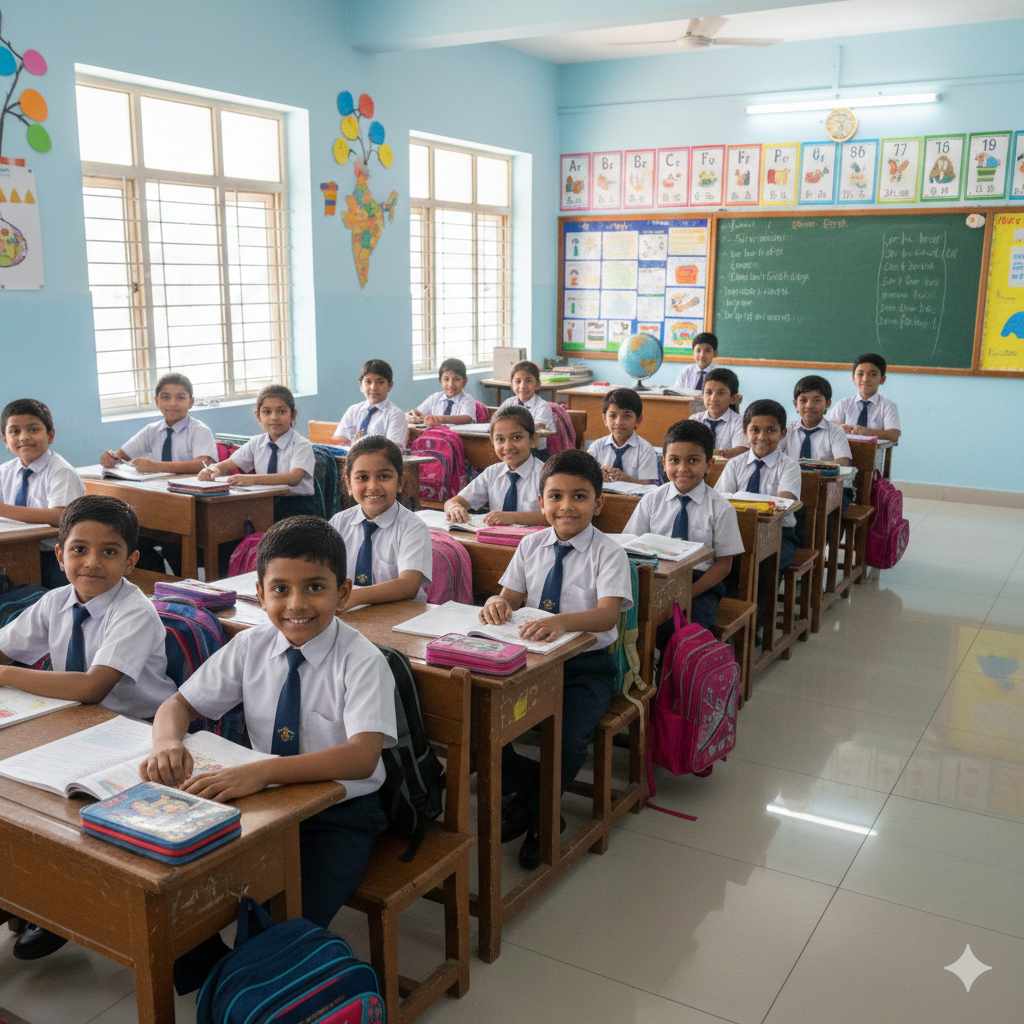
Primary schooling builds essential academic skills while nurturing curiosity and confidence. Our curriculum is designed to make learning interactive, meaningful and enjoyable.
Strong foundation in English, Tamil/Hindi & Mathematics
Introduction to Science and Environmental Studies
Reading, writing and comprehension skills
Concept-based learning instead of rote learning
Activity-based and project-based learning
A Peek at the Curriculum: Explain your school’s pedagogical approach (e.g., Montessori, Reggio Emilia, Play-Based, Waldorf). Focus on how children learn, not just what they learn.
Literacy Foundations: Explain pre-reading skills like phonological awareness, letter recognition, and sight word preparation.
Math in the Mud Kitchen: Show how practical, hands-on activities (like counting seeds, sorting buttons, or building towers) teach early math concepts (numeracy, comparison, geometry).
Show and Tell Success: Tips for parents on helping their child prepare for “show and tell” to build confidence and speaking skills.
The Art of Messy Play: Discuss the developmental benefits of process art, painting, water play, and why getting messy is encouraged.
Middle School (Grades 6–8)
Strengthens core subjects, introduces advanced concepts, encourages logical thinking, technology awareness and personality development.
The World of Electives: Spotlight different elective courses (e.g., Woodshop, Band, Digital Art, Foreign Language) with photos of student work.
Interdisciplinary Projects: Showcase projects that combine subjects, like a history/science project on ancient engineering or a math/art project on geometry.
Transition to Grade 6/7/8: Specific posts addressing what students can expect in the next grade level, including a preview of new subjects (like Algebra or Earth Science).
The Library/Media Center: Feature new books, tech resources, and services available to students, like research assistance.
High School
Focuses on academic excellence, exam preparation, practical learning, career guidance and shaping students for future success.
Subject Spotlights: Interview a teacher about a unique course (e.g., “Why You Should Take AP Environmental Science” or “Inside the Robotics Club”).
Curriculum Philosophy: Explain an educational approach, such as Project-Based Learning (PBL) or Inquiry-Based Learning, with real-world examples.
Study Hacks & Tips: Posts on time management, effective note-taking (like the Cornell Method), or surviving finals week.
Technology in the Classroom: Discuss how your school integrates tools like AI, coding, or specific educational apps.
Graduation Requirements: A simple, evergreen guide explaining the credits and required courses for graduation.
Teaching Methodology
Student-Centered Methods
This modern approach shifts the focus from the teacher to the learner, emphasizing active participation, exploration, and construction of knowledge. The teacher acts as a facilitator and coach.
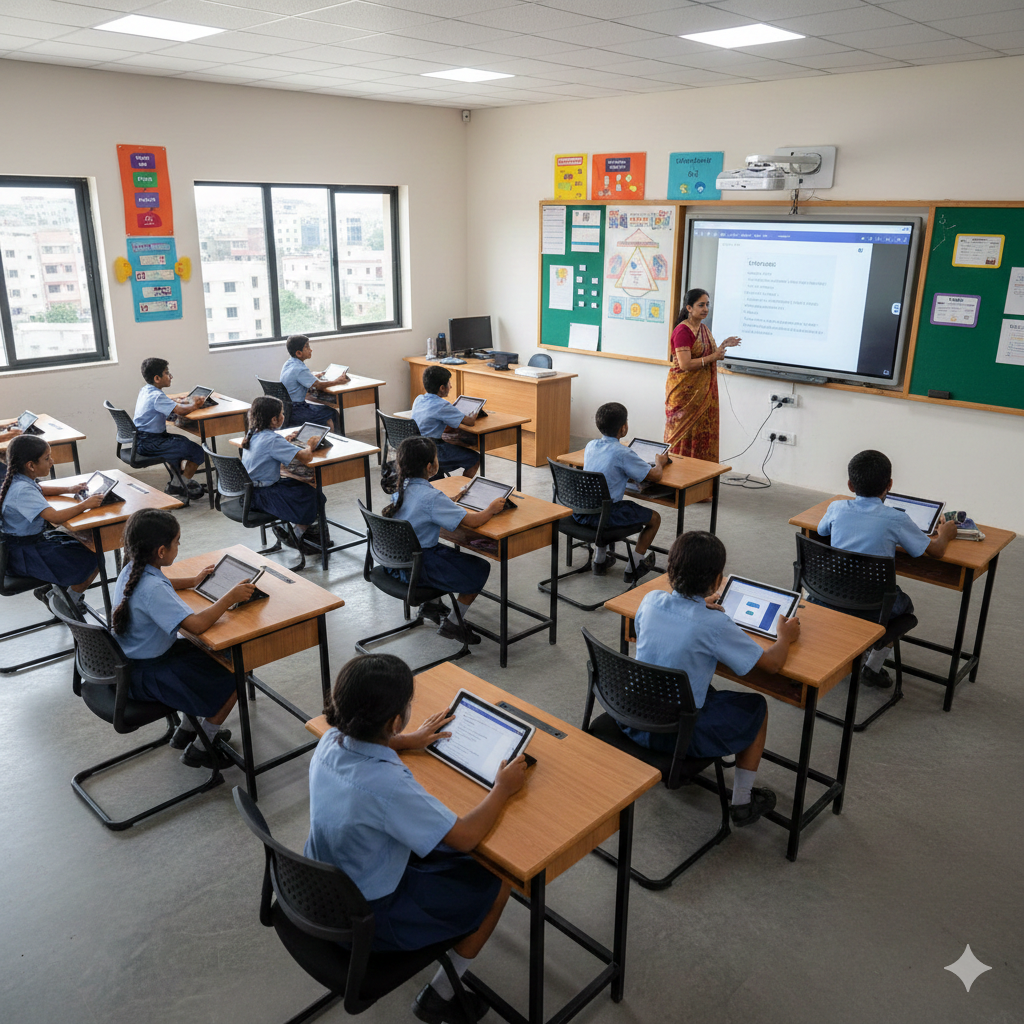
A digital classroom is a learning environment—which can be a physical classroom enhanced with technology, an entirely virtual space, or a hybrid model—where digital tools and resources are fully integrated into teaching and learning. The goal is to enhance engagement, personalize education, and improve efficiency.
Smart Boards/Interactive Displays: Replace traditional chalkboards, allowing teachers to write, draw, and display multimedia content directly on a large screen, making lessons more visual and interactive.
Assessment & Results
Assessment & Results in school is fundamentally about how student learning is measured and communicated. It involves three key areas: the purpose of the assessment, the different types of assessments, and how results are interpreted and used.
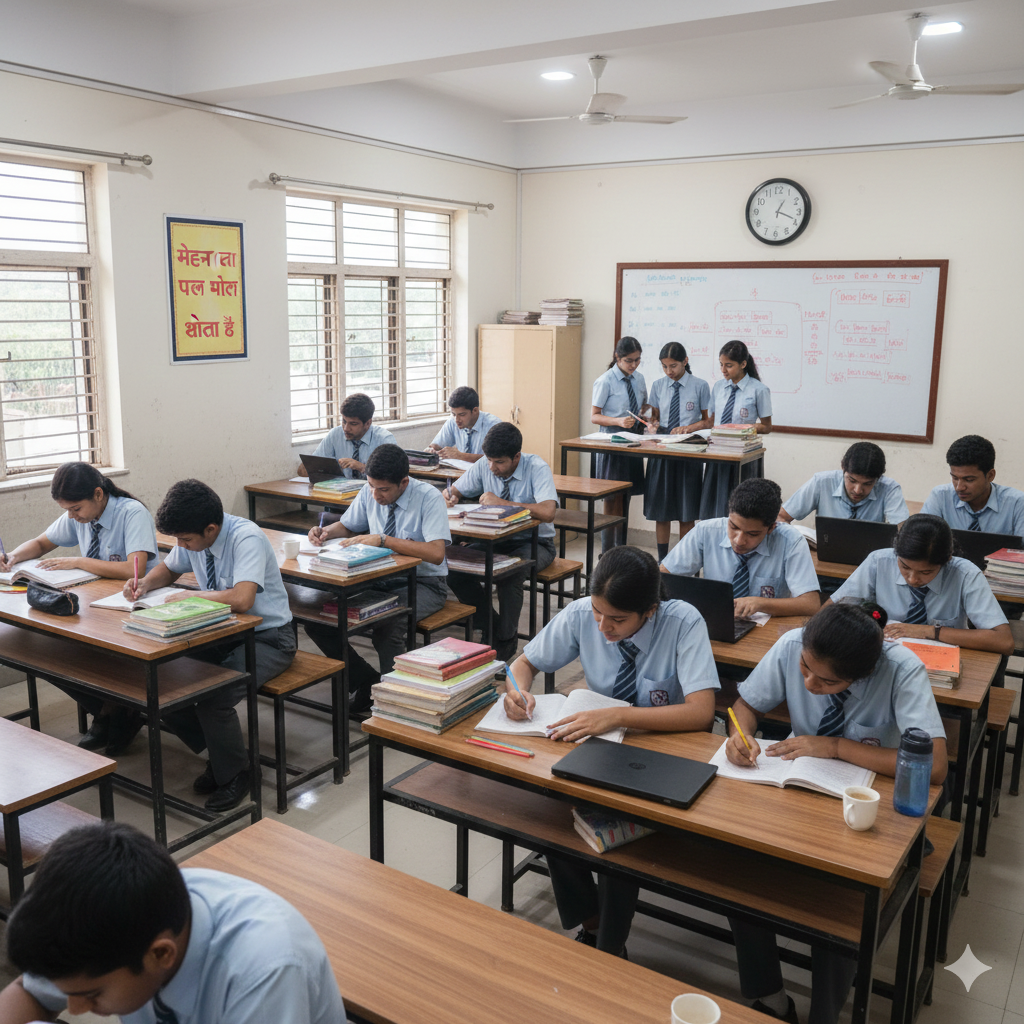
Assessment Preparation
Here is a detailed guide covering the essential steps and strategies for assessment preparation in school, focusing on what students need to do and the active learning methods that work best.
Strengthens memory and helps you identify true knowledge gaps.
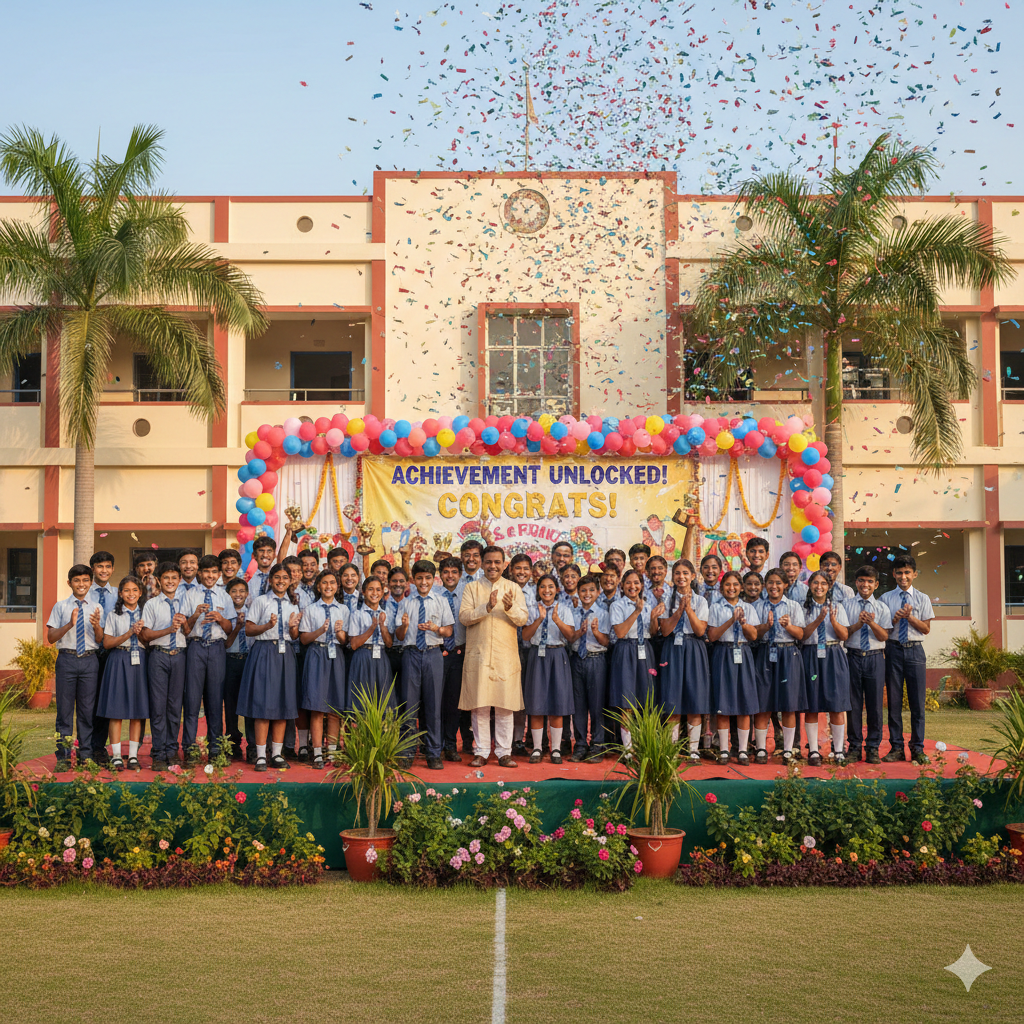
Achievements
School achievements encompass a broad range of successes beyond just grades. They are essentially documented instances where you have excelled or exceeded expectations in any area of school life.
Leading the organization of a major school event, like a cultural festival, large fundraiser, or school newspaper publication.